Why Your Brain Knows a Bot Wrote That Tweet Before You Even Finish Reading It
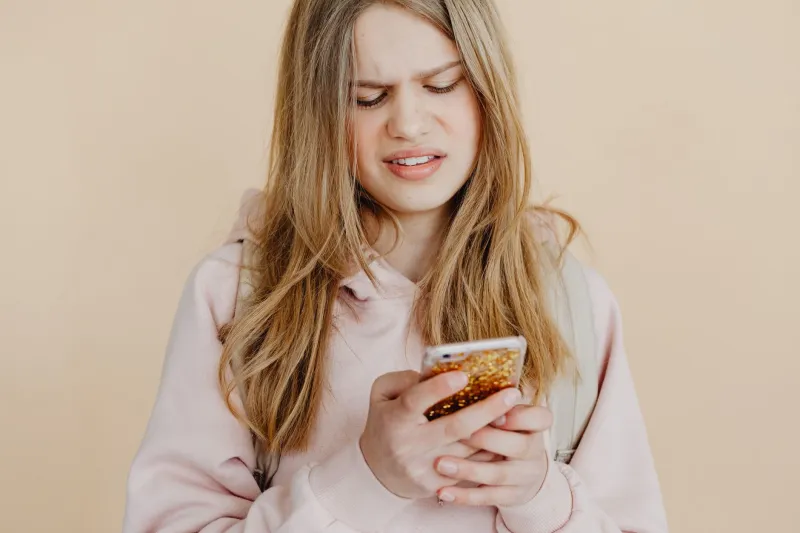
You've felt it. You're scrolling, half-awake, coffee in hand, and a tweet from some brand or influencer slides into your feed. You read it. Something pings in the back of your skull — a low-grade wrongness, like a laugh track on a show that isn't funny. You keep scrolling, maybe roll your eyes, maybe quote-tweet it with a single raised eyebrow emoji. You couldn't explain exactly why it felt fake. You just knew.
That instinct? It's not random. And at RetweetLab, we've spent a lot of time staring at the data trying to figure out exactly what's triggering it.
The Uncanny Valley Has a Twitter Address
In robotics and animation, the uncanny valley describes the unsettling feeling people get when something looks almost human but not quite. Think early CGI faces or certain humanoid robots — close enough to trigger recognition, far enough to trigger revulsion. The same phenomenon plays out on Twitter every single day, just with words instead of faces.
When a brand account tweets "We hear you, fam 👀" or an influencer posts a suspiciously polished 280-character life lesson that reads like it was workshopped by a committee, audiences feel that valley. The content is trying to perform humanity rather than express it. And humans — even distracted, doomscrolling humans — are remarkably good at spotting the performance.
The tell isn't always obvious. It's usually a combination of small signals stacking up fast.
The Linguistic Fingerprints of Fakeness
After analyzing engagement patterns across millions of tweets, a few recurring markers show up in accounts that audiences consistently flag as inauthentic or "try-hard."
Emotional overcorrection. Real people don't typically tweet "We are SO excited to share this incredible news with our amazing community!!" Three exclamation points and four superlatives in one sentence is a red flag. Genuine excitement tends to be specific and a little messy. It references something real, something small. Manufactured excitement is broad and loud because it's trying to reach everyone and ends up connecting with no one.
Trendjacking without context. When a brand account suddenly drops slang or references a meme that's three days past its peak, it doesn't land as relatable — it lands as surveillance. It signals that someone on the social media team was watching what was popular and decided to borrow it. Audiences can feel the lag. Real participation in a cultural moment looks different from a brand doing a victory lap on someone else's moment.
The hollow call to action. "Drop your thoughts below! 👇" is the digital equivalent of a waiter asking how everything is tasting before you've even taken a bite. It's procedural. It's checkbox engagement. Real accounts ask questions they actually seem curious about. The difference in response rates between the two is measurable — and significant.
What Authentic Actually Looks Like in Practice
Here's the uncomfortable truth: authenticity on Twitter isn't really about being unpolished. Some of the most "real" feeling accounts are incredibly strategic. The difference is that their strategy is built around a consistent, specific voice rather than a playbook of engagement tricks.
Take the accounts that routinely punch above their follower weight in terms of retweets and replies. A regional fast food chain that dunks on its own menu items. A solo creator who shares a genuinely embarrassing professional mistake and then ties it to something useful. A brand account that responds to customer complaints with actual personality instead of a canned "DM us for help" response. These accounts feel human because they're behaving with the same inconsistency, specificity, and mild chaos that humans actually behave with.
The pattern that shows up over and over in high-engagement authentic content is specificity over scale. Instead of "We love our customers," it's "Shoutout to the person who emailed us at 2am asking if our sauce is gluten-free. It is. We hope you slept eventually." One of those tweets gets ignored. The other gets screenshotted and shared in group chats.
Bots Are Getting Better, But So Are We
The bot side of this equation is evolving fast. Automated accounts have gotten significantly more sophisticated in mimicking natural language patterns — shorter sentences, deliberate typos, even simulated emotional reactions. Some are genuinely hard to catch on a tweet-by-tweet basis.
But behavioral patterns over time still give them away. Posting frequency that never wavers. Engagement that spikes identically across unrelated topics. Responses that are contextually adjacent but never quite on-target — like someone who understood the vibe of a conversation but not the actual words. Twitter's own internal research has acknowledged these patterns, and third-party analytics tools have gotten sharper at flagging them.
The more interesting story, though, isn't the obvious bots. It's the human-run accounts — brand teams, influencer management agencies, PR shops — that have inadvertently trained themselves to behave like bots. Rigid content calendars, approval chains that strip out any rough edges, voice guidelines so specific they eliminate all spontaneity. The result is technically human-authored content that reads like it was generated by a committee trained on a committee.
The Line Between Relatable and Cringe Is Thinner Than You Think
So where exactly is the line? Honestly, it moves. It moves by platform culture, by audience demographic, by news cycle, by the specific community a brand is trying to reach. There's no universal formula.
What the data does consistently show, though, is that the accounts that age best — the ones that maintain engagement over months and years rather than chasing viral spikes — tend to share a few traits. They have opinions. They acknowledge mistakes without turning the acknowledgment into a PR moment. They engage with replies in ways that suggest a person actually read them. And critically, they don't sound like they're trying to go viral. They sound like they're trying to say something.
The irony is sharp: the less an account optimizes for virality, the more likely it is to achieve it. The tweets that spread fastest are almost never the ones that were engineered to spread. They're the ones that said something true in a way that felt like the account couldn't not say it.
Your audience is running a continuous background process, filtering everything you post through a single question: does this feel real? The accounts that answer yes consistently aren't necessarily the most polished or the most strategic. They're just the ones that haven't forgotten that there's a person on the other end of the timeline.
And that person? They always know.